Search

Voice of the Monitored

Keeping an eye on the monitors

Author

jjincu

“You just turned my family’s house into another cell”

SHAWN HARRIS OF LANSING MI TALKS ABOUT BEING ON ELECTRONIC MONITORING

Shawn Harris thumbnailShawn Harris spent a year on electronic monitoring as a condition of his parole in Michigan. Today he works for a re-entry program in Lansing, helping other people deal with transitioning to the streets after prison.  Many of the people he works with are on some form of monitoring, either GPS, which tracks your movements in real time, or the Radio Frequency (also known as the tether) which merely informs the authorities of whether you are at home or not.

I spoke with Shawn about his own experience of being on both GPS and the tether as well as some of the problems other people he knows have encountered with monitoring. (click on photo to hear first part of interview.)  Shawn was quick to point out that GPS and the tether are not only applied to people with sex offense histories. While a 2006 law made lifetime GPS mandatory for certain categories of sex offenses, he points out that more and more people on normal parole are having electronic monitoring added to their regime.  In off camera discussions, he noted that this is just how the system works, that it is based on the money gained through incarceration. He believes that monitoring increases the probability that people will end up back in prison. As he put it, the system runs non-stop “like a hamster wheel…it goes round and round and round and everybody’s gettin’ their money.”

I have posted here four excerpts from our extended interview.

In the first excerpt Shawn talks about how when you are put on GPS you feel like the Department of Corrections “just turned my family’s house into another cell.” He spoke about the difficulties many families have with a loved one who is stuck in the house all day.  They need “breathing room” as he puts it, but there is little to be found.

In the second video, he talks about trying to find work while wearing an ankle bracelet.  The first obstacle he notes is that many people have a difficult time getting permission to leave the house to go to a job interview or even for the actual work shift. Then many employers will turn you away when they see that ankle bracelet.  He advises women going for job interviews while on monitoring to wear anything but a dress.

In the third video, he talks about the financial burden of being on GPS or the tether.  Many people don’t realize that those on monitoring have to pay a daily fee that may run into the thousands over the course of a year.  While Shawn’s estimates varied a little during the interview, he estimated his total costs were up to $6,000 for his year on monitoring.  Others have reported paying about $13 a day for GPS which comes to about $4,745 for a year. Some systems also require a land line, which is an additional cost.  Regardless of the exact amounts, the costs are considerable for a cohort that is largely unemployed or working in low-paying, part-time jobs. Those who can’t pay, have to work it off through doing community service.

In the final video, Shawn responds to my question of what advice he would give to the Michigan Department of Corrections (MDOC) about how they should run their program of electronic monitoring. His answers may come as bit of a surprise to people, especially those in the MDOC itself.

This interview is part of my research project, Monitoring the Monitors.  One of the key goals of this project is to present the stories of those on electronic monitoring-how it effects their daily lives, the job chances, their relationships, their chances of transitioning to the streets.

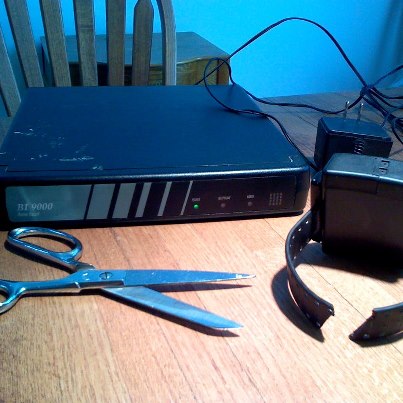
Electronic Monitoring: “Another burdensome condition of extending their incarceration”

Richard Stapleton Reflects on Decades of  Working with Michigan’s Electronic Monitoring Program

map of michigan[Here I present the highlights of my July 2013 interview with Richard Stapleton. Mr. Stapleton worked for the Michigan Department of Corrections (MDOC) for 34 years, retiring in 2011. He served as the MDOC’s Administrator for Legal Affairs and  was deeply involved in the state’s electronic monitoring program. He took  part in policy development and was a member of a legislative Task Force on monitoring in 2010. His comments give us a unique perspective on how electronic monitoring has become increasingly punitive and less frequently implemented as an “alternative to incarceration.”]

Michigan has one of the largest and most longstanding electronic monitoring (EM) programs in the country.  The MDOC began using monitoring in the mid-1980s. Since then the program has grown steadily. According to MDOC figures, there were 5,117 people in Michigan on electronic monitoring as of April 1, 2013. 79% of these were on parole.

 During our conversation, Stapleton highlighted the origins of monitoring as a vehicle targeted at “community status prisoners,” people who had not completed their sentence and were released into the community to do the rest of their time.  In those days, when they finished their sentence, they went off EM and transferred to normal parole without monitoring. Stapleton believes electronic monitoring can be effective in such circumstances.  He argues that it should serve primarily as an “alternative to incarceration.”  Compared to incarceration he says that “a year on the tether at home is great for the family, great for the community, great for the offender.”

Before GPS technology became available in the late 1990s, everyone was on Radio Frequency (RF). A radio frequency device does not track a person’s precise location but only reveals whether they are in the place designated as their base, typically their house.  In that era, Stapleton recalls that RF regimes were largely organized around a curfew which mandated that a person stay in the house during night time hours, from “something like 11 p.m.to 6 a.m.” The rest of the time, people were free to work, visit friends, or go shopping.

However, three important things happened to shift the parameters of electronic monitoring. First, the rise of GPS allowed not only real time tracking but also the ability to program “exclusion zones” into a person’s monitor.  With this feature, if the individual enters a prohibited zone, an alarm on their monitor will sound and their parole agent will be alerted. Second, according to Stapleton, around 2000 Michigan abandoned the idea of “community status” in favor of truth in sentencing. Under truth in sentencing  those who were incarcerated had to do all of their time in prison.  Serving  part of their time outside the walls was no longer possible. Third, in 2006 Michigan passed a law requiring lifetime monitoring for people with certain types of sex offenses.

These three factors, combined with an increased emphasis on national security, led to a major transformation in the operation of electronic monitoring. In the absence of community status, monitoring largely became a condition of parole.

Stapleton argues that this was a step backwards, that adding a monitor for people released from prison on parole acts as “another burdensome condition of extending their incarceration.”  He contends this shift led to a situation where Michigan has “lost track of what parole really was…that you have done your time.”  With the new regimes of EM he fears that the reality is “the more conditions you impose, the more violations you create.” He bemoans the situation that a “guy on parole has to call his parole agent to go and buy a pack of cigarettes.”  He also worries that a lack of clear cut rules and policies leaves those on parole with EM “at the whim of their agent.”

Stapleton mentioned a number of other concerns about present day EM.  He claimed the capacity of EM to prevent crime is exaggerated.  It doesn’t “keep you out of trouble” he says, but only becomes useful  “after the fact,” if police want “to prove the guy was in the area.”

In addition, Stapleton takes issue with comprehensive monitoring of people with sex offense histories, labeling the tethering of “every sex offender” a “waste of money” resulting from “legislative over-reaction.”  He suspects these laws were not simply an organic reaction to a crime problem. Rather he points out that service providers were involved in lobbying for changes to the laws¸ using hysteria over high profile sex crimes as an opportunity to expand their market.  While Michigan administers the EM program through state channels and its own Electronic Monitoring Center, BI Incorporated, the nation’s largest EM service provider, has garnered a major share of contracts with the state to provide the  technology.  BI is a fully-owned subsidiary of private corrections firm the GEO Group.

As for the future of monitoring, Stapleton maintains there is “room for expansion of the use” of EM “by putting it in the category of incarceration” and getting “around the guidelines.” He remains convinced that there “are lots of men trustworthy enough to be locked up out here” and EM is the ideal vehicle to make this happen. However, for the moment, the MDOC appears to have taken a different path.

Monitoring Companies Respond to Fear Campaign

Suddenly today in a number of newspapers across the country we have state by state accounts of electronic monitoring. All the articles are in the same rough format, even with similar titles: “A look at How NC Uses Electronic Monitoring” (Sacramento Bee) -cut and paste Washington and South Carolina and you have the title from and the Bradenton Herald and the Miami Herald. So the media departments in BI and other monitoring firms are busy trying to counter the critical article from the Associated Press yesterday. (see previous post on this blog). Amazing how the press so easily becomes a mouthpiece for corporate media releases.

Protection From Crime Does Not Equal Public Safety

greg's bracelet 1

FEAR CAMPAIGN ON ELECTRONIC MONITORING

Today ABC News ran a story about false alarms on electronic monitors worn by people on parole, probation, or on bail. http://abcnews.go.com/US/wireStory/ap-impact-ankle-bracelet-alarms-unchecked-19795774#.UfUpGAvT6SI.email

They cite several instances when the supervising authorities failed to respond to alarms which resulted in people committing serious crimes. Clearly this issue needs addressing. But much more numerous and unmentioned are the times when technological failures result in people on the monitors wrongly getting hauled off to prison or jail, losing employment opportunities, missing out on chances to keep their life on track. The reference point on electronic monitoring in this story, as almost everywhere, is the idea of public safety.

In this case, what they actually mean is protection from crime,which is a small part of public safety-access to health care, education, employment being the bigger parts. Protection from crime must always be considered in the context of rights. This is why we have the notion of “innocent until proven guilty.” Yet there is little discussion about the rights of people on parole or probation, especially those on ankle bracelets.

The emphasis on the technical failures of electronic monitoring which lead to crime heads us down a path of making monitoring simply more punitive rather than balancing freedom from crime with the rights of people on parole, probation, or bail. We don’t need to make electronic monitoring more like being incarcerated in your home.

The Bigger Picture

We need to see the bigger picture and not respond to headline media crimes with cries for harsher measures. The vast, vast majority of people on monitoring are quietly going about trying to keep their lives together. The policy makers and the media need to give them that chance, not look for headline stories which put all people on parole and probation in the same box.

European Union Acknowledges Rights of the Monitored

EU fundamental rightsThe European Union has published a draft recommendation on electronic monitoring. According to British researcher Mike Nellis, one of the members of the team working on the document, the final version will likely be approved later this year.

While the draft stops short of fully advancing a human rights agenda for monitoring, it contains important clauses which state:

“monitoring shall not be executed in a manner restricting the rights and freedoms of a suspect or an offender to a greater extent than provided for the by the decision imposing it”

The draft extends this agenda to take into account the “rights and interests of families and third parties in the place to which the suspect or offender is confined.”

Apart from these rights recognitions, the document spells out some limitations on the conditions of monitoring regimes, warning that they should not be “so restrictive as to prevent a reasonable quality of everyday life in the community” and that the conditions should “prevent the negative effects of isolation.”

In listening to the stories of people in the US on monitoring and studying the laws and contracts which apply to those being monitored, nowhere have I encountered an explicit acknowledgement of rights akin to what is in the EU document.  Policy makers and legislators in the US would do well to study the directions taken by the European Union in order to ensure that electronic monitoring does not lapse into  a virtual incarceration in the home with families bearing the costs and emotional trauma of that incarceration. To read the entire EU document go here.

San Antonio Schools Drop Monitoring Program

don't chip me broLast year two San Antonio high schools compelled all students to carry i.d. cards with computer chips  inside that allowed authorities to monitor their location. Today, the school district announced that they have dropped the program. This initiative had sparked widespread protests from parents and civil rights groups who considered this an invasion of the rights of the students.  In light of the recent NSA eavesdropping revelations, one might wonder where the data on students might have finished up. Anyway, this is one surveillance state story with a happy ending for now.  Read more at:

http://www.mysanantonio.com/news/education/article/Northside-ISD-drops-student-tracking-program-4667169.php


Is Electronic Monitoring Overused?

Orlando attorney Blair Jackson has written an article in the Faulkner Law Review where he argues that electronic monitoring is overused as a condition of bail, that judges put people on monitors for “no reason whatsoever.”

This begs the question: when is electronic monitoring an alternative to incarceration and when is it an add on that actually costs taxpayers more money and restricts the freedom of people on monitors unnecessarily? Here is the link to an interview with Jackson. More on this issue to come in my next blog.

http://www.blairjacksonlaw.com/blog/

Company Offers SWAT Team With Ankle Bracelets

According to the compaEM operational forcesny website entitled “Monitor Inmates” a firm  headed by Chey Rodriguez promises to add a new twist to electronic monitoring services- a Special Operations Team to arrest anyone who violates the conditions of their ankle bracelet regime.  The photo at right appears on their website, implying that these are their forces which allow them to bypass “local agencies.” The firm, which seems a bit evasive about actually providing their name on the website, also offers a technology that claims to not only monitor location but alcohol and drug consumption all in the same package.  They boast of successful operations in Spain and Peru and are ecstatic that San Bernadino County in California has added ankle bracelets to the probation regime of alleged gang members. The firm’s Executive Offices are in Miami, FL but they list satellites in Denmark, Argentina, Puerto Rico, Panama, Trinidad and Tobago and Barbados as well as a production site in Cleveland with a post office box address.  To have a look at their special operations promises visit: http://www.monitorinmates.net/services/electronic-bracelet-violation-special-task-force/

G4S Under Investigation for Overcharging for Electronic Monitoring in the UK

The global security firm G4S is under investigation on contracts for electronic monitoring in the UK valued at more than a billion dollars.  International auditing firm PricewaterhouseCoopers has been called into scrutinize the details of this 2005 deal, which involved G4S and another security firm, Serco. G4S is a mega-player in the industry with  an annual turnover of more than ten billion dollars and operations in 125 countries, including the US. Allegations include overcharging to an extent that according to one source, the cost of monitoring in the UK was more than ten times the figure for the US. While it is too early to determine the result in this case, the incident does remind us that electronic monitoring is big business and that global security firms like G4S (which botched the security for the 2012 London Olympics) and the US-based GEO Group view EM as a future source of enormous profits.  Untapped markets include the more than four million people on parole and probation in the US, high school students identified as disciplinary problems and undocumented workers.  Although in many minor criminal cases electronic monitoring may be a welcome relief from a jail or prison sentence, for those marketing the services future clients may more likely come from the ranks of those for whom an ankle bracelet represents an additional, profit-generating control rather than a respite from incarceration.

Create a free website or blog at WordPress.com.

Up ↑